
Types of Toddlers
May 15, 2026
Types of Toddlers
When I first lay eyes on a toddler, I start to discern what type of child I am meeting. I’ve found that toddlers usually fit into one of five categories:
- Temporarily shy.
- Afraid.
- Busy.
- Moody.
- Good natured.
In this section, we’ll talk about each type of child and the strategy and technique to use to successfully create a beautiful session.
Many new photographers are stressed about toddler sessions because there’s always a possibility that the toddler will not cooperate at all. The photographer feels the pressure to deliver great images for the parents and rightly so. Sometimes, however, I think that this stress is sensed by the child and has a negative impact. I stopped feeling this stress years ago and replaced it with acceptance. Some children are not going to cooperate. It’s just not their day. Fortunately, it doesn’t happen very often. The only stress I feel is pressure to do everything I can to get the pictures the parents want. If I feel I am doing everything I can, I feel no pressure. I feel satisfied that I am giving it 100% and I can’t do anything more than that. If the child just isn’t going to respond, we’ll try another day.
So, no, I don’t feel stressed. I don’t exercise patience. I just enjoy the child and use every ounce of skill I have to create amazing images. Thankfully, it usually goes okay.
Let’s start discussing the different personality types of toddlers. Remember, the three stages should usually be followed regardless of what type of child you think you’re dealing with. Occasionally, you’ll have a toddler grab your hand and want to walk back to the shooting area with you and you know you’re dealing with a good-natured child. Short of that, follow those three stages!
Type #1: Temporarily Shy
This is the category where most children fall. Almost every child, regardless of his personality type, will be a little shy at first. Most toddlers don’t have a lot of direct communication with adults and aren’t totally sure how to handle it. In fact, with most children, interaction with other adults has typically been negative. It has been a doctor or a daycare worker and they don’t like either. Keep that in mind as you approach every child. He or she is temporarily shy and you must handle your first encounter correctly or the entire session is going to be more difficult. As with babies, there are three stages that need to be handled correctly for any personality type.
Temporarily shy children will hide behind a parent’s leg when you first talk with them. They will want their parent to pick them up. They might turn the other way when you first try to talk with them. This is all very typical and doesn’t mean that the child is going to be afraid. It’s just how they start out and they need to warm up a little and they’ll be fine. You just have to go at their pace.
Keep in mind that a temporarily shy child may end up being any personality type. As I wrote earlier, almost every personality type starts out temporarily shy.
Strategy
The strategy to handling a temporarily shy child is simple compared to some of the other personality types. There are three keys:
- Start very quiet. I want to reinforce the key principle of the three stages. Don’t start loud and boisterous with this age! Start out with quiet interaction.
- Keep your distance. Have the parent be the one to pose them or repose them. Don’t get in the child’s ‘bubble.’ If you get up too close, you might spook the child and the ‘temporary’ shy part might get less temporary. I still follow the toddler technique of getting expression, I just do it from a distance.
- Take the focus off of them. Don’t stare at them. Don’t tickle them. Perhaps tickle their parents rather than the children. Keep in mind that sitting on a couch is not scary for any toddler. The scary part might be entirely the fact that you’re putting so much attention on them.
IMPORTANT NOTE: With temporarily shy children, try to capture that initial shy stage where the toddler is wanting to be with his parent. These are cute, precious images of a stage that will be short-lived and the parent will likely cherish these images above the other images you create. It shows the love, dependency, and how the toddler feels protected by his parent. Those are great things to capture so do it. Whether the child is wanting to be held or is simply hugging the parent’s leg, capture it. The parent might actually complain that he or she isn’t ready for pictures. Tell them that they won’t show much and take the pictures anyway. They’ll thank you later.
Type #2: Afraid
Afraid children are not temporarily shy. They are just afraid. Sometimes, toddlers remain afraid throughout the entire session. It’s usually a mix of separation anxiety and ‘stranger danger.’ They do not want to leave their parents’ arms and it isn’t a temporary thing. This is an especially challenging personality type because there aren’t many ‘cracks’ for us to work our way into their circle of trust. I realize that I have an afraid child if I’ve done the three stages correctly and handled the beginning of the session as if they were a ‘temporarily shy’ child and they still refuse to loosen their grip on their parents. The afraid child does a lot of crying and screaming.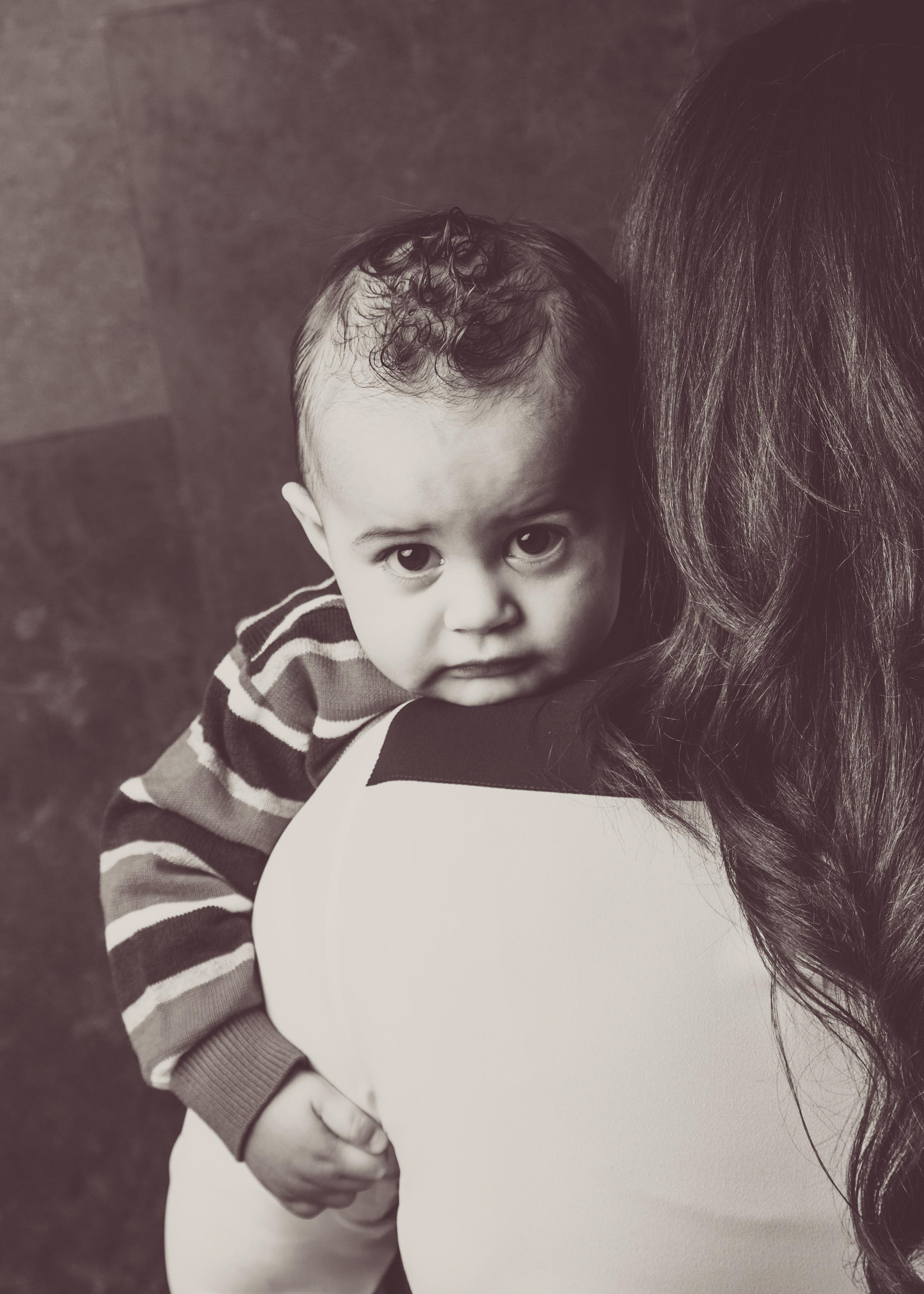
Strategy
The strategy with an afraid child is a focus on the ‘long game.’ If you continue to press forward with the session and make different attempts to get the child away from his parent, you’re just going to lengthen the time that he is afraid.
The toddler giving a stranglehold on the parent isn’t his natural state. He doesn’t likely do that all day. So, we have to give him an opportunity to return to his normal state by completely disengaging for a period of time. This doesn’t mean that you leave the area but you do back off and completely take your attention away from the child.
I usually ask the parent to sit down on the ground with the child. Eventually, the toddler will decide that he doesn’t want to grip his parent anymore. He’ll eventually just sit on her lap. Over time, he’ll get bored and want to do something other than sit. He’ll begin venturing around and checking his surroundings.
He’ll realize that his parent isn’t going anywhere - with or without him. He’ll also see that you’re not going to steal him or stick a needle in his arm. He’ll start to view you as something less than an imminent threat.
You’re going to need to be crafty at this point. Still keep your distance. You and the parent are going to need to work in tandem to ‘trick’ this child into getting his picture taken. These tricks may include:
- ‘Staging’ the parent away from the child. Asking the parent to sit on a couch. The toddler will likely follow. Place a toy on the other edge of the couch. He’ll eventually go for it and return to the parent’s lap. Have the parent replace it again. Repeat this a few times with you getting closer but not engaging. After a few times, knock the toy off of the edge and act like you don’t know where it went. The child will have to look for it. When they do, grab the boy and ‘celebrate’ as you back up with you camera. With any luck, the child will still be leaning on the far side of the couch, on his own, with his little hands on the armrest of the couch. Perfect picture.
- Distract the child en-route. Have the parent back up to a point that is further away and to the side of where you’re wanting to photograph. Place a toy away from the child so that the path he takes will include where you want the child to be. When he’s en-route to the toy and in the place where you want to photograph, be ready to get his attention with something funny. It might simply be yelling ‘yay’ or having something balancing on your head. Do something that will, at least, get him to pause for a second in the right spot. You’ll get a curious shot at worst and a smiling shot at best.
- Use treats as bribery. As discussed in the previous section, treats create motivation for the toddler to do what you want. A child who is afraid can have that fear overridden by a desire for treats. Giving the toddler treats builds trust between you and the child. Then, using the treats and promise of treats will cause your toddler to do what you want them to.
Type #3: Busy
There is a large percentage of children who are busy. Generally, these children are not shy. They are intensely curious and constantly on the move. They may get in a position for a second but will quickly move out of position. Unless something is really encompassing their attention, they won’t stay put. They want to be anywhere besides where they are at currently.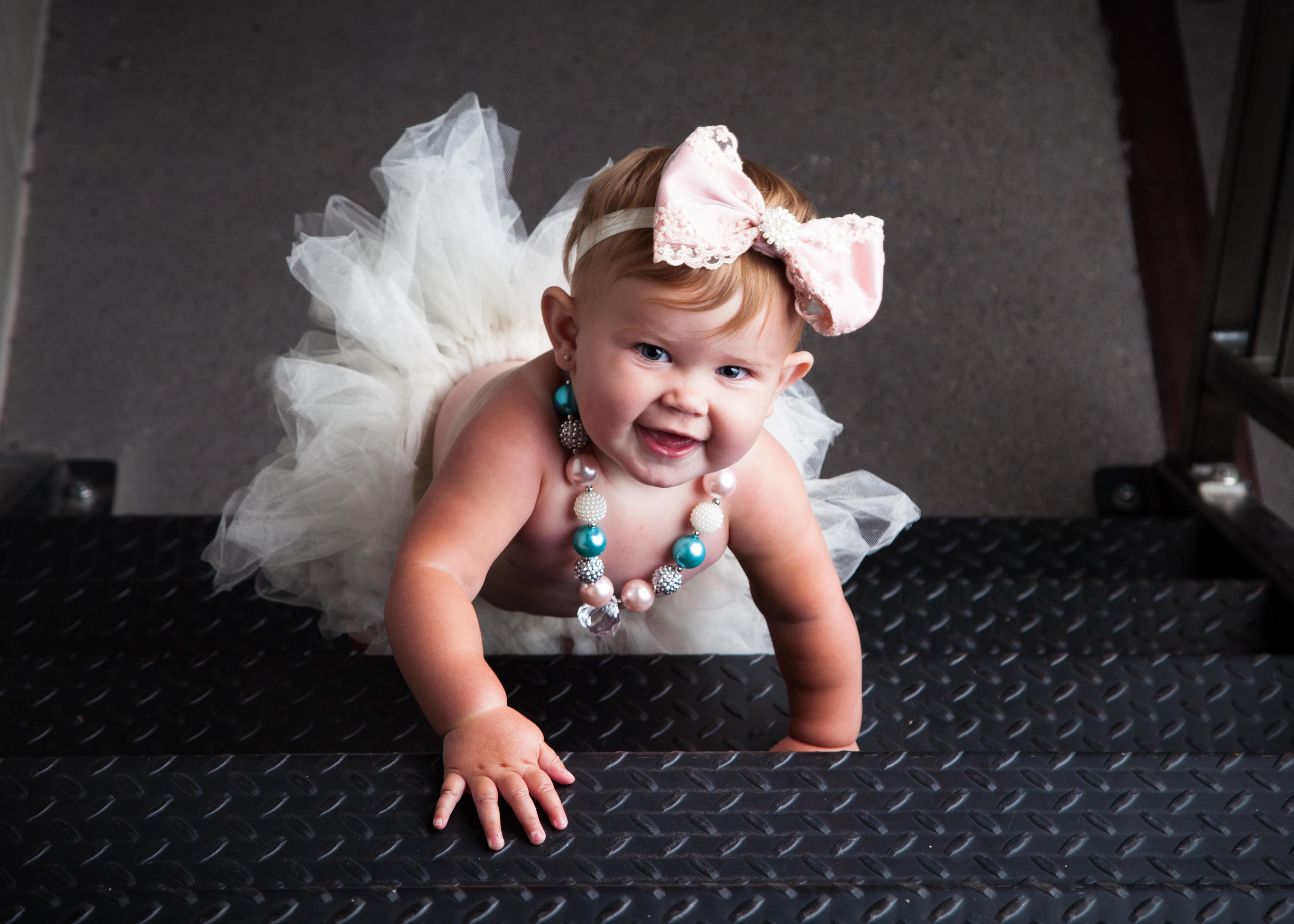
They are often cheerful but sometimes seem almost desperate. Almost like a drug addict searching for his next fix. :) Their eyes are scanning the room. They are determined. Obviously, they have a lot of energy.
Strategy
These children are the children that make me the most tired at the end of a day of shooting. You must move very quickly with these children. You are literally chasing them and replacing them to the spot that you want them. They usually aren’t very shy. They usually aren’t too interested in you after a very short amount of time. The keys to handling a busy child are:
- Get very prepared for each pose. With busy children, you’re not going to be able to make adjustments to your equipment or anything else after the child is in position. Basically, the time between them being in the spot you want and you clicking the picture needs to be about two seconds. If you are making adjustments to your camera or light, you’re done. Getting prepared also includes instructing the parent what they can do to help the session prior to the child getting in position. This might sound like, “Okay Hank, once we put him on his belly, you’re going to hold his bum down while I get his attention and when I jump back, that’s your cue to let go and scoot back.”
- Move quickly. Literally, everything you do must be quick. You’re going to have to pose, try to get expression, repose, try to get expression, repose, try to get expression and so on. You’re interacting with the child and creating distance as quickly as you can before he has a chance to run or move out of position.
- Be very interesting. Be a lot more animated than you are normally. These hyperactive children generally require more energy and loudness than normal children. This means that your face is more animated. Your voice is louder. You’re using a lot of different tones, pitches, volumes of noises. You’ll likely need some kind of attention-getting device with you - something that lights up or makes a loud noise.
- Take it down occasionally. It is possible, over the course of the session, to increase intensity to the point that both you and the hyperactive child are in a frenzy. You’re yelling and he’s running and there’s too much energy in the air. It can start to feel tense and actually add to the problem. If you feel like things are frantic, it’s a good idea to ‘take it down.’ In other words, I sometimes use those moments to start to whisper and be very relaxed and calm. Ironically, because you’re shifting gears so severely, it gets the child’s attention.
Type #4: Moody
Moody children are a challenge. Moody children aren’t generally afraid. They don’t seem to like human interaction. They don’t like being told what to do. They don’t like feeling like they’re being controlled. They are demanding. They don’t appear to want to play with you. They seem to have their own agenda and are determined. They might literally not feel well. It may be that they missed their naps or just came from the doctor’s office getting shots (happens all of the time actually). They seem tense and upset from the beginning. They are in a bad mood.
These children are sometimes, not always, a product of how they are being raised. They are used to getting what they want. They sometimes actually appear as if they are in charge of the parents. I say this because I never want you to think that a misbehaved child is anything less than perfect. I’ve seen photographers get frustrated with misbehaved children. Remember that they are all perfect and no frustration should ever be directed at a toddler. It’s ridiculous to think otherwise.
Strategy
Our strategy with a moody child is involved and requires a talented photographer. I’ve seen, many times, a moody child become a happy child as a result of what the photographer is doing. There are a lot of ways to handle a moody child and the technique can get a little complex. The key ways that we handle a moody child is to:
- Give them space. It’s a good idea to NOT press forward if they are reacting negatively to what your’e going. Taking a break and letting them get used to the area and see if they will calm themselves down. The more you push, the more upset they are going to be. It’s better to take a five minute break and have a great rest of the session rather than have a battle of wills for an hour.
- Join them. Make it not about taking pictures for a minute. Children can sense if you are truly interested in them or simply trying to get them to do something. If you make it not about pictures and simply just playing with them, they will sense that and you could actually build a strong bond with a child. I remember a little girl that didn’t want anything to do with pictures and so I just sat down on a step and played with a toy. No attention on her. It was only then that she joined me on the stair and actually wouldn’t leave my side the rest of her visit. The photographer actually took a picture of me and the girl. Two years later, in walks Sydney! We picked up right where we left off and the bond we created from that first session was still there! The connection came from pulling her rather than pushing her. She sensed that I cared about her and just wanted to play with her. A lot of this is getting on their level and empathizing.
Type #5: Good Natured
This is a child who is confident. He is independent. He is curious and interested in what you’re doing. He is affable and happy. He isn’t hyperactive or afraid. He’ll stay where you put him and seems to get what’s happening. These are calm, peaceful children who are a pleasure to take pictures of. When a good natured child walks in, it’s a good session.
Strategy
Have fun. This doesn’t happen very often. Enjoy it. Remember though, the most good natured child has a timer and will eventually tire of you and not want to cooperate. You still must not waste smiles at the beginning. Get a nice picture and MOVE ON!
-Eric